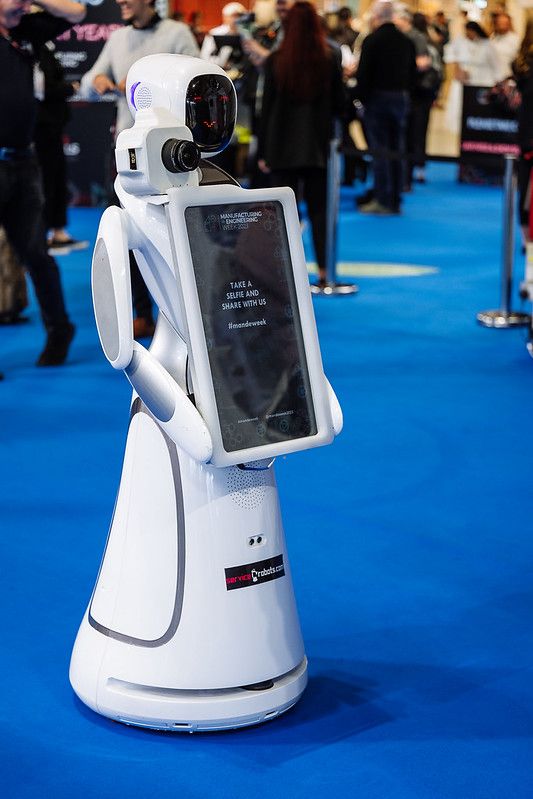
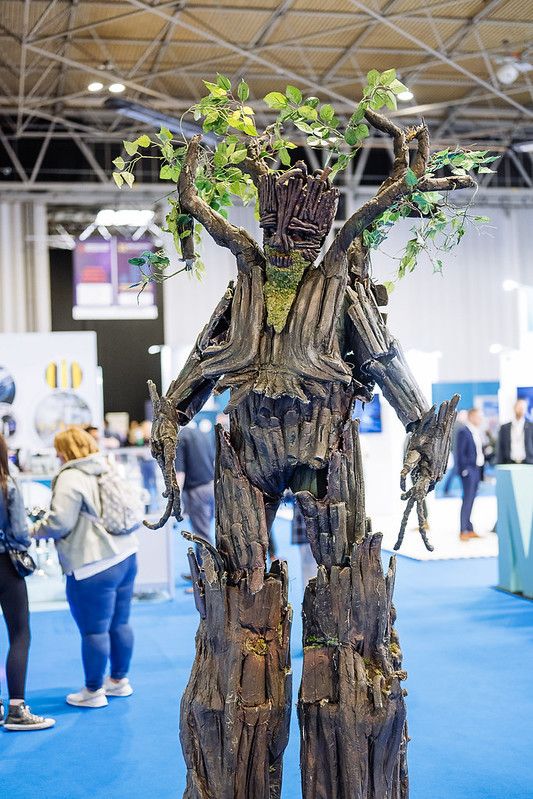
Smart Manufacturing Week 2026 is more than an exhibition — it’s a live showcase of innovation that brings together the people who are actually shaping the future of manufacturing + engineering. 

Whether you want to test software, see machinery in motion, or simply get inspired, you’ll leave with practical ideas, new contacts, and a clearer view of what’s possible in modern industry.

From AI on the shop floor to workforce transformation, resilience, and sustainability, this is where real challenges meet real solutions. 

It’s not about ideas. It’s about action. 

2026 content agenda

Free-to-attend sessions delivered by manufacturing and engineering experts covering Digital Transformation, AI & Industrial Data, Connected Factories, Design & Product Innovation, Leadership & Strategy, Maintenance and Manufacturers & Engineers of the Future.

Through a series of case studies, interviews and panels, discover the industry latest first-hand.

Accu presents FightFest: B2B fighting robot battles

An Initiative championed by Accu.co.uk, where designated teams battle fighting robots LIVE on the show floor. Over the 2 days a tournament will be held with the grand final on day 2 (Thursday 4th June). See up close and personal how important it is to champion 3D printing technology, precision components, CAD design and innovation.

Witness an unbeatable blend of sport, engineering and glorious mechanical mayhem.


Innovation Alley

Located at the very heart of Smart Factory Expo, Innovation Alley is the UK's leading showcase of all the new and developing technologies that will change the landscape of manufacturing over the next 5-10 years.

2026 will see ground-breaking new solutions from the next wave of tech and consultancy businesses targeting the UK manufacturing sector. 

Visitors are able to meet and engage with early-stage companies and their founders to uncover game-changing opportunities waiting for their business.

Live Music & Drinks

Gather around the Headline stage to hear our guest band play during the networking party! Enjoy a drink on us to wind down after a busy day.

Kicking off from 4.30 on Wednesday 3rd June at the Headline stage.

STEM Programme - Manufacturers of the Future

Our dedicated STEM afternoon enables students and apprentices about to take the first step into their careers to engage with the rapidly evolving world of manufacturing.


Best of British Showcase

Returning for 2026 - Join us in a celebration of domestic manufacturing, featuring world-beating new designs, innovative modes of manufacture, products that redefine categories, and export successes that plant the flag in overseas markets. 


app

Official Event App

The all-new way to experience Smart Manufacturing Week. 

✅ Interactive Event Schedule

✅ Exhibitor Directory & Maps.

✅ Live Notifications & Updates

✅ Exclusive Networking

✅ On-Demand Content


Dedicated Visitor Trails

Crafted by our team to ensure you meet all exhibitors relevant to your needs, the visitor trails guide you perfectly through the halls and put you where you need to be.

VIP Programme

Reserved for senior players, our VIP programme is a place for you to network with your peers away from the busy show floor. Including VIP lounge access.

Manufacturing Digitalisation Summit

Attendees will find out how digital technologies and processes (such as IT/OT convergence, AI, machine learning, IoT, 5G, digital twins, automation & advanced analytics) improve competitiveness & profitability.

Directors' Forum

Focused roundtable discussions about the realities of running a manufacturing business providing the best opportunity for open insight into real and current business issues.

Meet the Buyer with SMMT

SMMT is running their Meet the Buyer programme at Smart Manufacturing Week this June, aimed at helping buyers meet suppliers that fit their particular needs at any point during their purchasing cycle.


What exciting things are our exhibitors showcasing? 

What are our ambassadors saying about the biggest challenges in industry? 

Digital transformation isn’t a project. It’s the operating system of modern manufacturing. 

Manufacturing and engineering are entering a decisive era — one defined by volatility, complexity, and relentless technological advancement. Rising costs, fragile supply chains, and increasing global competition are rewriting the rules. 

In this environment, digital transformation is no longer optional. It is foundational. 

The most competitive manufacturers are no longer operating in silos. They are building connected, intelligent ecosystems — where data flows seamlessly from design to production to supply chain, enabling faster, smarter, real-time decisions. 

Because in modern manufacturing, speed and visibility are everything. 

Digital transformation turns complexity into clarity. It connects people, systems, and assets, giving organisations the control they need to optimise performance, improve traceability, and respond instantly to change. What was once reactive becomes predictive. What was once manual becomes automated. What was once hidden becomes visible. 

And the impact is tangible. 

From AI-powered analytics that predict disruption, to digital twins that simulate decisions before they’re made, to connected assets that reduce unplanned downtime by up to 50% — digital technologies are not just improving operations, they are redefining them. 

They are also reshaping the workforce. 

By capturing institutional knowledge and translating it into digital tools — from immersive training to intelligent workflows — manufacturers can bridge critical skills gaps, accelerate onboarding, and empower teams to perform at a higher level. 

But this transformation goes deeper than technology. 

At its core, digital transformation is about building intelligent infrastructure — an operational backbone where systems don’t just support decisions, but actively inform and optimise them. It is the foundation for autonomy, where machines, processes, and entire factories can adapt and respond with minimal human intervention. 

And it starts with data. 

Digitising, structuring, and connecting information across the organisation unlocks immediate value — creating the platform for automation, AI, and continuous improvement at scale. 

Because the reality is clear: 

The manufacturers embracing digital today are building smarter factories, more resilient supply chains, and more agile, future-ready businesses.Those who delay won’t just fall behind. 

They’ll become irrelevant. 

Inclusion isn’t an initiative. It’s a performance advantage. 

Manufacturing and engineering have always been built on innovation, problem-solving, and precision. But the industries that will lead the future are those that apply that same rigour to people as they do to processes. 

Diversity, equity and inclusion are not “nice to have”. They are critical drivers of performance. 

Inclusive teams think differently. They challenge assumptions faster, solve problems more creatively, and build more competitive solutions. When organisations open the door to a wider range of voices, backgrounds and experiences, they unlock the full potential of their workforce — and strengthen their ability to compete on a global stage. 

Because talent is everywhere. Opportunity isn’t. 

The future of manufacturing depends on breaking down barriers to entry and progression — ensuring that people are not defined by where they start, but by what they can contribute. Whether someone’s path begins in education, another industry, or another country, diverse journeys bring fresh thinking that drives better outcomes. 

But inclusion doesn’t happen by accident. It must be engineered. 

In an industry obsessed with optimising machines, systems and processes, it’s time to apply that same mindset to workplace culture. EDI should be treated as a core operational metric — just like quality, productivity, and safety. 

That means embedding inclusive practices into how we hire, develop and lead. 
It means designing environments where people feel psychologically safe, supported, and able to perform at their best. 

And it means recognising that wellbeing and mental health are not side conversations — they are fundamental to building resilient, high-performing teams. 

Because the reality is simple: 

The organisations that build inclusive cultures will move faster, innovate better, and attract the talent they need to thrive. 

Those that don’t will struggle to keep up. 

Sustainability isn’t a side initiative. It’s the engine of modern manufacturing. 

In today’s manufacturing landscape, sustainability has moved beyond compliance or corporate responsibility. It is now a defining driver of performance, innovation, and long-term competitiveness. 

The most forward-thinking manufacturers understand a simple truth: sustainable businesses are better businesses. They run more efficiently, waste less, innovate faster, and ultimately outperform their peers. Research shows companies embedding sustainability into their operations can grow significantly faster — proving that doing the right thing and achieving commercial success are no longer mutually exclusive. 

But sustainability isn’t built in boardrooms alone. It happens on the shop floor. 

It’s in the continuous improvement mindset — refining processes, reducing waste, and finding smarter ways to operate every single day. It’s in the optimisation of production systems, the reduction of material usage, and the transition to cleaner, more efficient energy. 

It’s also in the detail. 
Something as simple as identifying loose electrical connections or load imbalances can cut energy waste by up to 30%, improving both sustainability performance and profitability. These practical, data-driven interventions are where real impact happens — reducing cost, improving safety, and enabling more intelligent, condition-based maintenance. 

Crucially, the journey starts at the very beginning. 

Up to 80% of a product’s environmental impact is determined at the design stage. That means the greatest opportunity lies in embedding sustainable thinking early — designing smarter products, engineering efficient systems, and making better material choices from day one. 

And sustainability extends beyond processes and products. It includes building resilient operations, developing skilled workforces, and creating organisations that are fit for the future. 

Because this is the reality: 
Sustainability is no longer optional. It is a core business requirement. 

The manufacturers who embed it into everyday decision-making — from design to delivery — will reduce risk, unlock efficiency, and build stronger, future-ready brands. 

Those who don’t, simply won’t keep up. 

Resilience isn’t a backup plan. It’s a competitive advantage. 

In manufacturing and engineering, nothing moves without the supply chain. 

Every product, every process, every delivery depends on the reliable flow of materials, components, and services — often across complex, global, multi-tier networks. When that flow is disrupted, operations don’t slow down. 

They stop. 

In an era defined by geopolitical uncertainty, economic volatility, and increasing complexity, supply chain resilience has become a core business priority. It’s no longer about efficiency alone — it’s about ensuring continuity, protecting capability, and maintaining competitive advantage in a world where disruption is inevitable. 

The most effective organisations don’t plan for everything to go right. 

They design systems that perform when things go wrong. 

Just like in health and safety, resilience is built through preparation, visibility, and control. It means identifying vulnerabilities before they become failures. It means building in safeguards, diversifying risk, and creating the flexibility to adapt under pressure. 

And critically, it means learning from disruption — using it as a catalyst to strengthen systems, not just recover from them. 

Because resilient supply chains don’t just protect output. 

They protect people, reputation, and long-term sustainability. 

They enable manufacturers to meet commitments, maintain customer trust, and operate with confidence — even in the most uncertain conditions. 

And at a national level, they do even more. 

Strong, resilient supply chains underpin industrial capability, economic stability, and long-term growth. 

Because the reality is simple: 

In a world where disruption is constant, resilience is what separates those who react… from those who remain in control. 

Sustainability in manufacturing and engineering isn't just an ethical imperative - it's a competitive advantage. By designing smarter processes, reducing waste, and embracing cleaner energy, we future-proof our industries while protecting the planet for generations to come.
John Gerard
Director |  Auditel
Sustainability refers to many areas within the manufacturing and engineering sector from creating and retaining a skilled workforce to reducing operational cost and increasing efficiency. It is a major driver of modern engineering excellence and product differentiation with up to 80% of a product's environmental impact determined during the design phase, being innovative and embedding sustainable principles at an early stage is key to giving business a strategic advantage. Integrating sustainability principles into smart manufacturing, and optimising energy, water, and material use, will reduce operational cost improving efficiency and capacity.
Stuart Duckett
Design Director |  MEFAB Industro Engineering Group

In engineering and manufacturing we are trained to optimise our machinery and technical assets for productivity, efficiency, and safety, and yet we don't always apply this same engineering mindset to the people we work with or the workplace around us. We need to treat DEI as a core business metric in the same way that we do quality control or physical safety, especially at a time when mental health and wellbeing and psychological safety within these sectors is extremely concerning when compared with other industries.

Poggy Murray Whitham
Director |  OutEngineered
Having attended Smart Manufacturing Week last year, I saw firsthand that manufacturing and engineering are at their best when different voices, backgrounds and routes into the industry are genuinely included. As someone from Ghana whose journey has taken me from physics and teaching into automotive and systems engineering, I believe DEI matters because better industries are built when opportunity is wider and talent is not limited by where someone starts.
Mohammed Farouk
Student |  University of Bradford

Digital transformation matters because the industrial landscape has fundamentally shifted. Manufacturers are now operating in an environment defined by rising input costs, volatile supply chains, tightening regulation, and rapid advances in data, AI and automation, smart factory, IoT, AI and edge strategies are already well underway across the sector.  

It’s also become a business necessity rather than a technology choice.  Integrating systems, improving visibility, and modernising processes directly improve competitiveness, compliance and innovation.  

Finally, digital transformation is critical because the sector is in a decisive transition, where success depends on agility, resilience and data-driven decision-making,  modern manufacturing now turns on clarity, control and digital infrastructure rather than traditional engineering capability alone.

Toby Mankertz
Manufacturing Industry Director |  Columbus Global
Those who embrace digital technologies today are building smarter factories, more resilient supply chains, and a stronger future for their business.
Yasir Abdulkareem
Manufacturing Engineer |  WAFER LTD
Supply chain resilience is critical to manufacturing and engineering because production depends on the reliable flow of specialised materials, components, and services - any disruption can stop operations entirely. With increasing global uncertainty and complex, multi-tier supply chains, resilient networks help businesses manage risk, meet delivery commitments, and remain competitive. For the UK, strong supply chain resilience also protects industrial capability and long-term economic security.
Karen Finegold
Head |  Engineering Supply Chain UK
In health and safety, we don’t plan for things to go right - we plan so that when things go wrong, people and operations remain protected, we build a resilient system that can withstand pressure. Supply chain resilience is no different, and by identifying vulnerabilities, building in safeguards, and using disruption as a learning opportunity, organisations move from reacting to risk to actively controlling it - protecting not just output and profit, but people, reputation, and long-term sustainability.
Andy Hooke CMIOSH
Principal Health and Safety Consultant |  AH Safety and Compliance Specialists

A True Festival Experience

Fun

festval1

Immersive

festival 2

Memorable

Festival 3

REGISTER NOW FOR 2026 AND JOIN THE FUTURE OF SMART MANUFACTURING & ENGINEERING